

Heartbreak is one of the most powerful emotions a person can experience. Whether it comes from a relationship breakup, the loss of a loved one, rejection, or disappointment, a broken heart meaning goes far beyond sadness. It represents emotional pain, grief, love and loss, healing, resilience, and hope after heartbreak. Across cultures, religions, psychology, and modern digital communication, the broken heart symbol has become a universal sign of deep emotional suffering and the journey toward emotional recovery.
The broken heart symbol (💔) is recognized worldwide as an expression of heartbreak, loneliness, trust issues, rejection, and emotional trauma. However, it can also symbolize strength, self-healing, spiritual growth, and the courage to begin again. While many people associate it only with failed romantic relationships, a broken heart can also reflect friendship loss, family conflicts, betrayal, or personal grief.
In this comprehensive guide, you’ll discover the true broken heart meaning, its symbolism in love, spirituality, psychology, dreams, the Bible, different cultures, and social media. You’ll also learn how experts explain broken heart syndrome, why heartbreak can feel physically painful, and practical ways to begin healing after heartbreak.
Symbols Meaning Guide: 100+ Common Symbols and Their Meanings Explained (2026)
Related Reading: Before exploring the broken heart symbol, you may also like our complete Heart Symbols Meaning guide. You can also compare this symbol with the meanings of the Red Heart Meaning, White Heart Meaning, Black Heart Meaning, and Purple Heart Meaning to understand how different heart symbols express unique emotions.
What Does a Broken Heart Mean?
Quick Answer
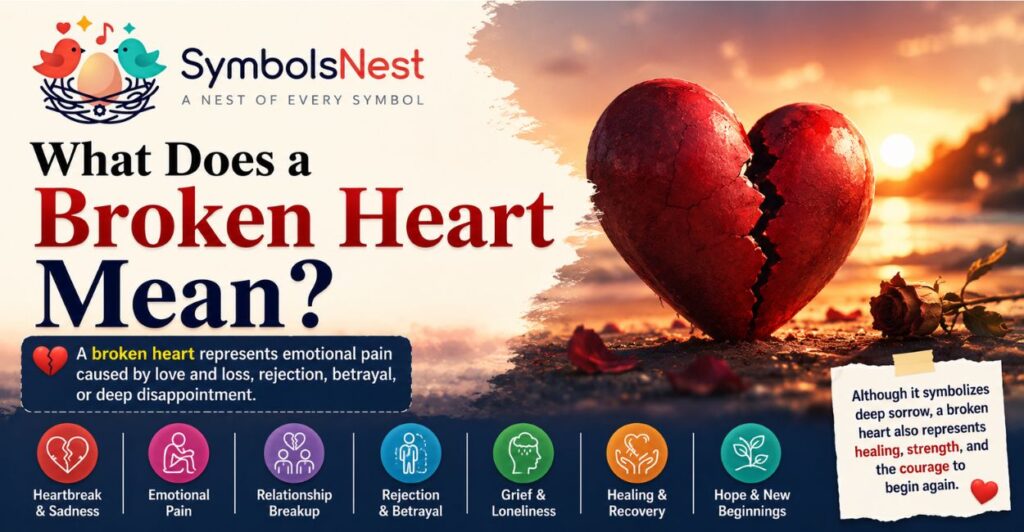
A broken heart meaning refers to intense emotional pain caused by love and loss, rejection, grief, betrayal, or major life changes. The broken heart symbol (💔) represents heartbreak, sadness, emotional healing, and the hope of recovery. Although it often symbolizes the end of a romantic relationship, it can also express grief after losing someone important, broken trust, loneliness, or emotional trauma.
Today, the broken heart emoji and symbol are used around the world to communicate feelings that are difficult to express with words. They remind us that while emotional pain is real, healing after heartbreak is possible.
Why Is the Broken Heart Symbol So Powerful?
The human heart has represented love, compassion, and affection for centuries. When artists and storytellers began illustrating a heart split into two pieces, it became a visual metaphor for emotional suffering. Over time, this image evolved into the modern broken heart symbol, recognized across cultures and languages.
Unlike many symbols that have only one interpretation, the broken heart carries multiple layers of meaning.
It can represent:
- The end of a romantic relationship
- Love and loss
- Emotional pain
- Rejection
- Grief after losing a loved one
- Betrayal and trust issues
- Loneliness
- Emotional recovery
- Personal growth
- Hope after heartbreak
- Resilience through difficult experiences
Because these emotions are nearly universal, the symbol connects with people regardless of age, culture, or language.
Broken Heart Meaning at a Glance
| Symbol | Meaning |
| 💔 | Heartbreak and emotional pain |
| 💔 | Relationship breakup |
| 💔 | Love and loss |
| 💔 | Grief and mourning |
| 💔 | Rejection and disappointment |
| 💔 | Emotional healing |
| 💔 | Hope after heartbreak |
| 💔 | Recovery and resilience |
Broken Heart Symbol Meaning
The broken heart symbol meaning extends far beyond romance. While many people immediately think of a breakup, psychologists explain that heartbreak is actually the emotional response to losing someone or something deeply meaningful. This is why people experience heartbreak after divorce, losing a close friend, family conflict, betrayal, or even the loss of a cherished dream.
The broken heart symbol represents the emotional journey from pain to healing. Initially, it reflects intense sadness, loneliness, and grief. Over time, however, it begins to symbolize emotional recovery, resilience, and personal growth.
Today, the broken heart symbol is widely used in:
- Text messages
- Social media posts
- Relationship discussions
- Mental health awareness campaigns
- Inspirational quotes
- Poems and songs
- Digital conversations
- Memorial tributes
Its popularity continues to grow because it instantly communicates complex emotions without needing lengthy explanations.
Emotional Meaning of the Broken Heart Symbol
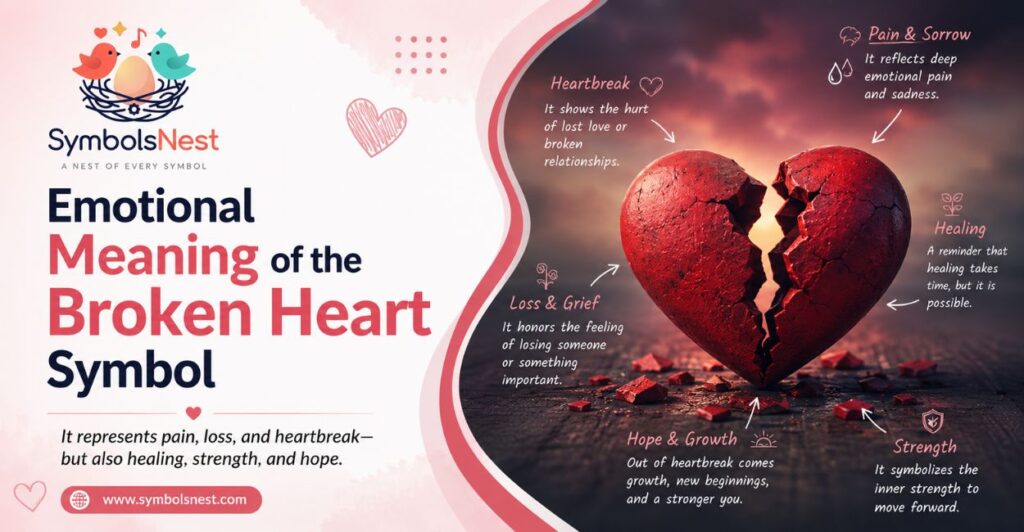
Emotionally, a broken heart often represents feelings that many people experience after losing someone important.
These emotions include:
- Heartbreak
- Emotional pain
- Sadness
- Grief
- Loneliness
- Rejection
- Trauma
- Fear of being hurt again
- Trust issues
- Emotional healing
- Coping with heartbreak
- Hope after heartbreak
Although these emotions can feel overwhelming, mental health experts agree that emotional recovery is a gradual process. Healing often involves accepting grief, rebuilding confidence, strengthening resilience, and reconnecting with supportive relationships.
Symbol History
The broken heart symbol has existed in literature and artwork for hundreds of years. Ancient writers often described a “broken heart” as a poetic expression of sorrow. During the Middle Ages, artists illustrated cracked hearts to represent unfulfilled love, sacrifice, and emotional suffering.
In modern times, digital communication transformed the symbol into the familiar 💔 Broken Heart Emoji, making it one of the world’s most recognized symbols for heartbreak, rejection, and emotional pain.
Despite its association with sadness, many people now also use it to acknowledge healing after heartbreak, showing that emotional wounds can eventually lead to wisdom, compassion, and personal growth.
How It Compares to Other Heart Symbols?
Understanding the broken heart becomes easier when compared with other popular heart symbols.
- ❤️ Red Heart Meaning represents romantic love, passion, affection, and deep emotional connection.
- 🖤 Black Heart Meaning often symbolizes grief, dark humor, mystery, emotional strength, or sorrow.
- 🤍 White Heart Meaning represents peace, purity, remembrance, sympathy, and unconditional love.
- 💜 Purple Heart Meaning symbolizes compassion, honor, support, creativity, and spiritual healing.
- 💔 Broken Heart Meaning uniquely represents heartbreak, love and loss, grief, emotional pain, healing, and resilience.
Together, these heart symbols help people express different relationship emotions and emotional experiences in both real life and digital conversations.
Broken Heart Emoji Meaning ❤️🩹💔
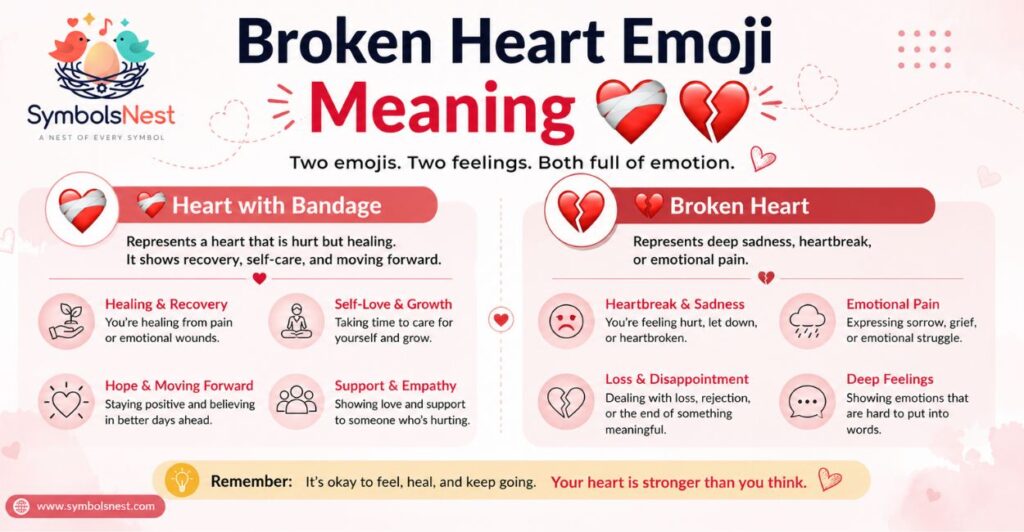
The broken heart emoji meaning (💔) has become one of the most recognized symbols of emotional pain in digital communication. While it is commonly used after a relationship breakup, its meaning extends far beyond romance. People also use the emoji to express grief, disappointment, rejection, loneliness, betrayal, and emotional trauma.
Unlike words, the broken heart emoji instantly communicates feelings that are often difficult to explain. Whether shared in a text message, social media post, or online conversation, it tells others that someone is experiencing heartbreak, sadness, or love and loss.
In recent years, another emoji has gained popularity alongside it—the Mending Heart emoji (❤️🩹). While 💔 represents emotional pain, ❤️🩹 symbolizes emotional healing, recovery, hope, and resilience. Together, these emojis reflect the journey from heartbreak to healing.
What Does the Broken Heart Emoji Mean?
The 💔 emoji can represent many emotions depending on the situation, including:
- Romantic heartbreak
- Relationship breakup
- Love and loss
- Grief after losing someone
- Rejection
- Betrayal
- Loneliness
- Trust issues
- Emotional pain
- Mental exhaustion
- Missing someone deeply
Because emotions are personal, the same emoji may have different meanings for different people. Someone might use 💔 after a breakup, while another may use it to express sadness over the loss of a family member, a friendship ending, or even heartbreaking world events.
Broken Heart Emoji on Social Media
On platforms like Instagram, Facebook, X, TikTok, and WhatsApp, the broken heart emoji is commonly used in:
- Breakup captions
- Sad quotes
- Memorial posts
- Emotional song lyrics
- Friendship loss messages
- Mental health awareness posts
- Inspirational recovery stories
Its widespread use has made the broken heart emoji meaning universally understood across cultures and languages.
Broken Heart Emoji vs Other Heart Emojis
Different heart emojis express different emotions.
- ❤️ Red Heart symbolizes love, romance, affection, and passion.
- 🖤 Black Heart often represents grief, mystery, sarcasm, or emotional strength.
- 🤍 White Heart symbolizes peace, sympathy, remembrance, and unconditional love.
- 💜 Purple Heart represents compassion, care, kindness, creativity, and spiritual support.
- 💔 Broken Heart symbolizes heartbreak, emotional pain, grief, rejection, and healing after heartbreak.
- ❤️🩹 Mending Heart represents recovery, forgiveness, emotional healing, and hope.
If you’d like to learn how these symbols differ, explore our guides on Red Heart Meaning, Black Heart Meaning, White Heart Meaning, Purple Heart Meaning, and the complete Heart Symbols Meaning guide.
Spiritual Meaning of a Broken Heart
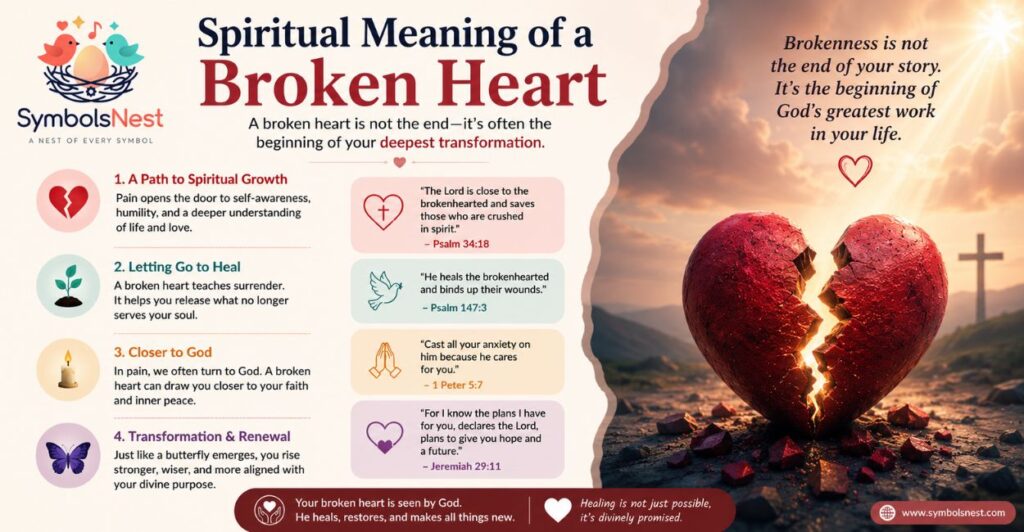
The spiritual meaning of a broken heart is often very different from its emotional meaning. While heartbreak may initially feel like suffering, many spiritual traditions view it as a period of transformation, self-discovery, and personal growth.
A broken heart can encourage people to let go of unhealthy attachments, reflect on their values, strengthen their faith, and discover inner peace. Instead of seeing heartbreak as an ending, many spiritual teachings describe it as the beginning of a new chapter.
A Symbol of Growth and Renewal
- Develop compassion
- Build resilience
- Practice forgiveness
- Discover self-worth
- Deepen spiritual awareness
- Strengthen emotional maturity
- Learn healthy relationship boundaries
Although emotional pain is difficult, it often encourages personal growth that might not have happened otherwise.
Spiritual Healing After Heartbreak
Healing after heartbreak is rarely immediate. Spiritual healing focuses on restoring inner peace rather than simply forgetting painful memories.
Healthy spiritual healing practices include:
- Prayer
- Meditation
- Journaling
- Gratitude
- Mindfulness
- Spending time in nature
- Helping others
- Self-reflection
- Forgiveness
- Building supportive relationships
These practices support emotional healing while helping people regain hope after heartbreak.
Broken Heart as a Reminder of Hope
Many spiritual traditions believe that emotional wounds can become sources of wisdom. Just as physical injuries heal over time, emotional pain can gradually transform into empathy, resilience, and compassion for others.
For this reason, the broken heart symbol is not only associated with grief but also with hope, renewal, and emotional recovery.
Biblical Meaning of a Broken Heart
The biblical meaning of a broken heart emphasizes God’s compassion for those experiencing grief, suffering, disappointment, and emotional pain. Throughout the Bible, brokenhearted people are reminded that they are not alone and that healing, comfort, and hope are available through faith.
Rather than viewing heartbreak as weakness, Scripture often presents it as a moment when people draw closer to God, seek wisdom, and experience spiritual renewal.
One of the most well-known verses is:
“The Lord is close to the brokenhearted and saves those who are crushed in spirit.” — Psalm 34:18
This verse has comforted countless people facing loss, rejection, or emotional hardship.
Biblical Lessons About Heartbreak
The Bible encourages believers to:
- Trust God during difficult seasons.
- Pray honestly about emotional pain.
- Find strength through faith.
- Practice forgiveness.
- Show compassion to others.
- Hold onto hope even during suffering.
These teachings continue to inspire millions of people who are coping with heartbreak, grief, and emotional struggles.
A Heart That Can Heal
Biblical teachings remind readers that healing often takes time. Faith does not remove emotional pain instantly, but it offers guidance, comfort, and hope throughout the healing journey.
For many believers, a broken heart becomes an opportunity to grow spiritually, rebuild trust, and develop greater compassion for others.
Psychological Meaning of a Broken Heart
From a psychological perspective, the broken heart meaning refers to the emotional response people experience after losing an important relationship, facing rejection, or experiencing significant grief. These feelings are genuine psychological reactions—not signs of weakness.
Researchers have found that heartbreak activates many of the same brain regions involved in physical pain. This explains why emotional pain can sometimes feel physically overwhelming.
Why Does Heartbreak Hurt So Much?
Emotional psychology suggests that humans naturally form deep emotional bonds. When those connections are suddenly lost, the brain responds with stress, sadness, anxiety, and grief.
Common psychological effects include:
- Emotional pain
- Sadness
- Loneliness
- Loss of motivation
- Difficulty concentrating
- Anxiety
- Sleep disturbances
- Appetite changes
- Trust issues
- Fear of future relationships
These reactions are common after a relationship breakup or significant personal loss.
Understanding the Grief Stages
Although everyone heals differently, psychologists often describe several stages of grief that may occur after heartbreak:
- Shock
- Denial
- Anger
- Bargaining
- Sadness
- Acceptance
People may move through these stages in different orders, and some stages may repeat. Healing is rarely a straight path.
Mental Health and Heartbreak
Most people recover naturally with time, support, and healthy coping strategies. However, if emotional pain becomes severe, lasts for months, or begins affecting daily life, speaking with a qualified mental health professional can be helpful.
Healthy coping strategies include:
- Talking with trusted friends or family
- Exercising regularly
- Maintaining healthy sleep habits
- Journaling emotions
- Practicing mindfulness
- Seeking professional counseling when needed
These approaches support emotional recovery while reducing the long-term psychological effects of heartbreak.
Can a Broken Heart Affect Physical Health?
Surprisingly, yes. Medical experts recognize a rare condition called broken heart syndrome, also known as takotsubo cardiomyopathy. This temporary heart condition can be triggered by sudden emotional or physical stress, such as grief, the loss of a loved one, or a traumatic event.
Symptoms may include:
- Chest pain
- Shortness of breath
- Irregular heartbeat
- Fatigue
Although most people recover with appropriate medical care, these symptoms can resemble those of a heart attack. Anyone experiencing sudden chest pain or breathing difficulty should seek immediate emergency medical attention.
This condition highlights the powerful connection between emotional well-being and physical health, reminding us that heartbreak is not “just emotional”—it can have real effects on both the mind and body.
Signs of a Broken Heart
One of the most common questions people ask is, “What are the signs of a broken heart?” While everyone experiences heartbreak differently, emotional psychology shows that losing someone important can affect your emotions, thoughts, behavior, and even physical health.
A broken heart is not limited to the end of a romantic relationship. It may also result from grief, rejection, betrayal, family conflict, or the loss of a close friendship. Recognizing these signs is the first step toward emotional recovery and healing after heartbreak.
Emotional Signs of a Broken Heart
Most people experience intense emotional pain immediately after a significant loss. These emotions may change over time as the healing process begins.
Common emotional signs include:
- Persistent sadness
- Frequent crying
- Feeling emotionally numb
- Loneliness
- Grief
- Anxiety
- Fear of being alone
- Mood swings
- Loss of motivation
- Difficulty finding joy in everyday life
These emotions are natural responses to love and loss and often become less intense as emotional healing progresses.
Mental Signs of Heartbreak
Heartbreak can also affect the way a person thinks.
Some common psychological effects include:
- Constantly thinking about the past
- Replaying conversations repeatedly
- Difficulty concentrating
- Confusion
- Self-doubt
- Trust issues
- Overthinking
- Reduced confidence
- Feeling rejected
Many people question themselves after a relationship breakup, but experts encourage focusing on self-growth rather than self-blame.
Physical Signs of a Broken Heart
Emotional pain sometimes produces physical symptoms because the brain and body are closely connected.
Physical signs may include:
- Fatigue
- Trouble sleeping
- Headaches
- Chest tightness
- Loss of appetite
- Increased appetite
- Muscle tension
- Low energy
- Shortness of breath caused by stress
In rare situations, severe emotional stress can contribute to broken heart syndrome (takotsubo cardiomyopathy), which requires immediate medical evaluation if symptoms resemble a heart attack.
Healthy Ways to Respond
If you recognize these signs, remember that healing takes time.
Helpful strategies include:
- Talking to trusted family or friends
- Maintaining healthy routines
- Getting enough sleep
- Exercising regularly
- Practicing mindfulness
- Seeking professional support if emotional pain becomes overwhelming
Recognizing the signs early allows people to begin coping with heartbreak before emotional pain becomes more difficult to manage.
What Causes a Broken Heart?
Another frequently asked question is, “What causes a broken heart?”
Although many people associate heartbreak with romantic relationships, emotional psychology shows that heartbreak occurs whenever we lose someone, something, or a future we deeply valued.
A broken heart develops because humans naturally form emotional attachments. When those bonds suddenly change or disappear, the brain experiences stress, grief, and emotional pain.
Common Causes of Heartbreak
Relationship Breakup
The most common cause is the end of a romantic relationship. A breakup often brings feelings of rejection, sadness, loneliness, and uncertainty about the future.
Loss of a Loved One
Grief after the death of a family member, friend, or partner can create profound emotional pain that lasts long after the loss.
Betrayal and Broken Trust
Dishonesty, infidelity, or broken promises may damage emotional security, leading to heartbreak and long-lasting trust issues.
Rejection
Being rejected by someone you care about—or missing an important opportunity—can trigger feelings of disappointment and emotional loss.
Family Conflicts
Serious disagreements, separation, or distance within families may also cause emotional suffering and grief.
Friendship Loss
Close friendships often become an important part of daily life. Losing a trusted friend can hurt just as deeply as the end of a romantic relationship.
Life Changes
Major life events such as divorce, relocation, retirement, or losing a meaningful goal can also create feelings of heartbreak.
Why Some People Hurt More Than Others
Every person heals differently. Factors that influence emotional recovery include:
- Personality
- Previous life experiences
- Emotional support
- Mental health
- Coping skills
- Resilience
- Strength of the emotional connection
There is no “correct” timeline for healing. Everyone’s journey is unique.
What Symbolizes a Broken Heart?
Many readers ask, “What symbolizes a broken heart?”
The most recognized symbol is the 💔 Broken Heart, but throughout history people have used many images to represent emotional pain, grief, separation, and hope after heartbreak.
These symbols often remind us that emotional wounds can eventually heal.
The Broken Heart Symbol (💔)
The universal broken heart symbol represents:
- Emotional pain
- Heartbreak
- Love and loss
- Grief
- Relationship breakup
- Betrayal
- Emotional recovery
- Hope after heartbreak
Because it is understood around the world, the broken heart symbol has become one of the most powerful forms of emotional communication.
Cracked Heart Artwork
Artists frequently use cracked or shattered heart illustrations to express emotional suffering while also suggesting that healing is possible.
Tears
Tears symbolize grief, vulnerability, acceptance, and emotional release. Many cultures view crying as a healthy part of the healing process.
Rain and Storms
Storms often represent emotional struggles. As storms eventually pass, they also symbolize resilience, renewal, and hope.
Wilting Flowers
A fading flower represents temporary sadness, loss, or the end of a relationship, while new blooms symbolize emotional recovery and fresh beginnings.
Broken Chains
Broken chains symbolize freedom from unhealthy relationships, emotional burdens, or painful experiences.
Comparing Heart Symbols
Each heart symbol communicates different emotions.
| Heart Symbol | Meaning |
| ❤️ Red Heart | Love, romance, passion, affection |
| 🖤 Black Heart | Grief, mystery, strength, sorrow |
| 🤍 White Heart | Peace, remembrance, sympathy |
| 💜 Purple Heart | Compassion, kindness, spiritual healing |
| 💔 Broken Heart | Heartbreak, emotional pain, healing, resilience |
For a complete comparison, explore our articles on Red Heart Meaning, Black Heart Meaning, White Heart Meaning, Purple Heart Meaning, and the complete Heart Symbols Meaning guide.
Common Emotions Behind a Broken Heart
Heartbreak is rarely caused by a single emotion. Instead, it is a combination of complex relationship emotions that change over time.
Understanding these feelings can make the healing journey easier and help people realize that their experiences are normal.
Sadness
Sadness is often the first emotion people notice after experiencing love and loss. It reflects the importance of the relationship or connection that has ended.
Grief
Grief is not limited to losing someone through death. It also occurs after breakups, divorce, broken friendships, and significant life changes.
Many people move through different grief stages, including shock, denial, anger, bargaining, sadness, and acceptance.
Loneliness
After losing someone important, everyday routines often change. This can create feelings of loneliness, even when surrounded by other people.
Rejection
Feeling unwanted or unaccepted can reduce confidence and increase emotional pain. Over time, however, many people rebuild self-esteem through healthy relationships and personal growth.
Fear
Heartbreak sometimes creates fear of trusting others again. These trust issues are common after betrayal or emotional trauma but usually improve through patience and supportive relationships.
Anger
Some individuals experience frustration toward themselves, another person, or the situation. Healthy emotional recovery involves expressing anger constructively rather than allowing it to control future relationships.
Hope After Heartbreak
Although heartbreak feels overwhelming, it does not last forever. One of the most meaningful aspects of emotional healing is discovering that painful experiences can also build:
- Resilience
- Compassion
- Self-awareness
- Emotional maturity
- Stronger boundaries
- Greater appreciation for healthy relationships
Many people eventually discover that the lessons learned through heartbreak prepare them for healthier and more meaningful relationships in the future.
Remember, healing after heartbreak is not about forgetting the past. It is about accepting your experiences, learning from them, and moving forward with renewed confidence and hope.
Broken Heart Meaning in Love
The broken heart meaning in love is one of the most searched topics because love creates deep emotional bonds. When those bonds are broken, people often experience heartbreak, emotional pain, grief, and uncertainty about the future. Whether the relationship ends because of distance, betrayal, incompatibility, or changing life goals, the broken heart symbol (💔) reflects the emotional impact of love and loss.
However, heartbreak is not only about losing another person. It can also become a journey of self-discovery, emotional healing, and personal growth. Many relationship experts explain that heartbreak often teaches valuable lessons about communication, trust, boundaries, and self-worth.
Why Love Can Feel So Painful
Love involves emotional attachment. When that attachment suddenly changes, the brain responds with stress hormones and emotional distress. This is why a relationship breakup may cause both emotional and physical discomfort.
Common emotions include:
- Sadness
- Loneliness
- Rejection
- Grief
- Confusion
- Anxiety
- Trust issues
- Emotional pain
- Fear of starting over
These reactions are normal and usually become less intense as emotional recovery begins.
Love Symbolism Behind the Broken Heart
The broken heart symbol represents more than the end of a relationship. It also symbolizes:
- Deep love that once existed
- Emotional vulnerability
- Personal transformation
- Strength after suffering
- Hope after heartbreak
- Resilience
- New beginnings
Many people eventually realize that heartbreak helps them better understand themselves and recognize healthier relationships in the future.
Healing After a Relationship Breakup
Healing after heartbreak does not happen overnight. Healthy recovery often includes:
- Accepting your emotions without judgment.
- Spending time with supportive friends and family.
- Focusing on physical and mental well-being.
- Learning from the experience.
- Setting healthy boundaries.
- Practicing self-care and self-healing.
Over time, emotional pain becomes easier to manage, allowing people to move forward with greater confidence.
Related Reading: Compare the Broken Heart Meaning with the Red Heart Meaning, which symbolizes lasting love, passion, affection, and emotional connection.
Broken Heart Meaning in Relationships
The broken heart meaning in relationships extends beyond romantic partners. Heartbreak can occur whenever trust, love, or emotional security is damaged. Family disagreements, broken friendships, betrayal, and even workplace relationships may leave someone feeling emotionally hurt.
The broken heart symbol reminds us that every meaningful relationship has the power to bring both happiness and emotional challenges.
When Relationships Become Painful
Healthy relationships are built on communication, respect, honesty, and trust. When these foundations weaken, emotional pain often follows.
Some of the most common causes include:
- Lack of communication
- Betrayal
- Infidelity
- Constant conflict
- Emotional distance
- Unmet expectations
- Loss of trust
- Growing apart
These experiences can create feelings of rejection, sadness, and loneliness.
Rebuilding After Heartbreak
Although heartbreak feels overwhelming, many people eventually develop stronger emotional resilience.
Relationship experts recommend:
Accept Your Feelings
Avoid suppressing emotions. Acknowledging grief is an important step toward emotional healing.
Learn From the Experience
Every relationship teaches valuable lessons about communication, compatibility, and personal values.
Focus on Self-Growth
Invest time in hobbies, education, health, and personal goals. Personal growth often strengthens future relationships.
Rebuild Trust Gradually
After betrayal, trust issues are natural. Healthy trust develops slowly through positive experiences rather than rushing into new relationships.
Stay Connected
Support from trusted friends, family members, or counselors can make emotional recovery much easier.
Heartbreak does not define your future. Instead, it often becomes an opportunity to build healthier and more meaningful relationships.
Broken Heart Meaning in Dreams
Many people wonder, “What does a broken heart mean in dreams?”
Dream interpretation varies between cultures and psychological theories, but a broken heart in a dream often reflects unresolved emotions rather than predicting future events.
Dreams frequently process emotions that we may not fully recognize while awake.
Common Dream Interpretations
Emotional Healing
Dreaming about a broken heart may indicate that your mind is processing grief, sadness, or emotional recovery from past experiences.
Fear of Loss
Sometimes the dream reflects anxiety about losing someone important rather than an actual relationship problem.
Letting Go
A broken heart dream may symbolize releasing painful memories, unhealthy relationships, or emotional burdens.
Personal Transformation
Some dream experts believe heartbreak in dreams represents personal growth, maturity, and preparing for a healthier future.
Unresolved Emotions
If painful experiences remain unaddressed, dreams may provide a safe way for the brain to process emotional trauma and relationship emotions.
Psychological View of Dreams
Modern psychology suggests that dreams help organize memories, emotions, and stressful experiences. A broken heart dream does not necessarily predict a breakup. Instead, it may reflect:
- Emotional stress
- Anxiety
- Grief
- Relationship concerns
- Personal change
- Emotional recovery
- Healing after heartbreak
Keeping a dream journal may help identify recurring emotional patterns and encourage healthy self-reflection.
Spiritual Dream Meaning
Some spiritual traditions believe that dreaming of a broken heart encourages:
- Forgiveness
- Self-healing
- Emotional balance
- Letting go of the past
- Trusting life’s journey
- Developing resilience
Rather than seeing these dreams as negative signs, many people view them as reminders that healing and growth are taking place.
Broken Heart Meaning in Different Cultures
Although the broken heart symbol is recognized worldwide, different cultures interpret heartbreak through their own traditions, beliefs, and values. Despite these differences, one message remains consistent: emotional pain is a universal human experience.
Western Cultures
In many Western countries, the broken heart symbolizes:
- Romantic heartbreak
- Divorce
- Relationship breakup
- Emotional pain
- Love and loss
- Hope after heartbreak
The symbol frequently appears in literature, music, films, greeting cards, and social media, where it represents both sadness and resilience.
Eastern Traditions
Many Eastern philosophies place greater emphasis on emotional balance and acceptance.
Heartbreak is often viewed as:
- A temporary stage of life
- A lesson in personal growth
- An opportunity for spiritual healing
- A reminder of life’s constant changes
Practices such as meditation, mindfulness, and compassion are commonly encouraged during emotional recovery.
Religious Perspectives
Across many faiths, a broken heart is not viewed as permanent suffering.
Instead, it often symbolizes:
- Faith during hardship
- Hope
- Compassion
- Forgiveness
- Inner strength
- Spiritual renewal
These teachings encourage people to remain hopeful while trusting that emotional wounds will gradually heal.
Cultural Symbolism Around the World
Different cultures use various symbols to express heartbreak and emotional recovery, including:
- Cracked hearts
- Wilting flowers
- Falling leaves
- Rain
- Empty benches
- Broken chains
- Candles
- Doves
Although these symbols differ, they all represent the journey from grief toward emotional healing and hope.
Universal Meaning of the Broken Heart Symbol
No matter where someone lives, the broken heart symbol continues to represent shared human emotions.
Across cultures, it commonly expresses:
- Emotional pain
- Grief
- Love symbolism
- Relationship emotions
- Rejection
- Healing after heartbreak
- Resilience
- Hope
- New beginnings
Its universal meaning explains why the 💔 emoji has become one of the world’s most recognizable emotional symbols.
Explore More Heart Symbols: To better understand the language of heart emojis and symbols, read our related guides on Heart Symbols Meaning, Red Heart Meaning, Black Heart Meaning, White Heart Meaning, and Purple Heart Meaning. Together, these articles explain how each heart color represents different emotions, relationships, and forms of human connection.
How to Heal a Broken Heart Naturally
Healing after heartbreak is a gradual process that requires patience, self-compassion, and healthy coping strategies. Whether your emotional pain comes from a relationship breakup, grief, rejection, or another personal loss, recovery is possible. While there is no instant cure for heartbreak, small daily steps can help restore emotional balance and improve your mental health.
The goal is not to erase painful memories but to develop resilience, rebuild confidence, and move forward with hope after heartbreak.
1. Allow Yourself to Feel Your Emotions
Many people try to hide sadness or ignore emotional pain, but psychologists agree that acknowledging your feelings is an important part of healing.
It is normal to experience:
- Grief
- Sadness
- Loneliness
- Anger
- Confusion
- Disappointment
Accepting these emotions allows your mind to process them in a healthy way.
2. Stay Connected With Supportive People
Heartbreak often makes people withdraw from others. However, spending time with trusted friends, family members, or supportive communities can reduce feelings of loneliness and encourage emotional recovery.
Talking openly about your emotions can help you gain perspective and feel less isolated.
3. Practice Self-Healing
Self-healing involves caring for both your emotional and physical well-being.
Healthy habits include:
- Eating balanced meals
- Sleeping regularly
- Exercising
- Reading inspiring books
- Journaling your thoughts
- Practicing gratitude
- Limiting negative social media exposure
These simple routines can strengthen emotional resilience over time.
4. Focus on Mental Health
Heartbreak affects mental health as much as emotions. Activities such as mindfulness, meditation, deep breathing, and relaxation exercises may help reduce stress and anxiety.
If emotional pain becomes severe or lasts for an extended period, seeking support from a qualified mental health professional can be a valuable step toward recovery.
5. Forgive Without Forgetting
Forgiveness does not mean approving of someone’s actions. Instead, it allows you to release emotional burdens that prevent healing.
Forgiveness often helps reduce anger, resentment, and ongoing emotional pain.
6. Rediscover Yourself
Many people discover new hobbies, interests, friendships, or career goals after heartbreak.
Use this period to:
- Learn a new skill.
- Travel.
- Volunteer.
- Exercise.
- Pursue personal dreams.
- Build healthy routines.
Personal growth often becomes one of the greatest benefits of emotional recovery.
7. Remember That Healing Takes Time
There is no fixed timeline for heartbreak recovery. Some people heal within weeks, while others need months or longer.
The important thing is to continue making healthy choices each day. With patience and support, emotional pain gradually becomes easier to manage.
How Long Does a Broken Heart Last?
One of the most frequently searched questions is:
“How long does a broken heart last?”
The answer varies because every individual, relationship, and life experience is different.
Some people begin feeling better after several weeks, while others require several months to emotionally recover. Factors such as the length of the relationship, the circumstances of the breakup, personal resilience, emotional support, and overall mental health all influence the healing process.
Factors That Affect Recovery
Healing may take longer when:
- The relationship lasted many years.
- There was betrayal or broken trust.
- The loss involved the death of a loved one.
- There is limited emotional support.
- Previous emotional trauma remains unresolved.
Recovery may happen more smoothly when people:
- Accept their emotions.
- Maintain healthy routines.
- Stay socially connected.
- Seek support when needed.
- Practice self-care.
Is It Normal to Still Feel Sad?
Yes.
Many people experience waves of grief even after they begin feeling better. Anniversaries, songs, familiar places, or memories can temporarily bring back sadness.
These emotional responses are a normal part of healing after heartbreak.
When Should You Seek Professional Help?
While heartbreak is a natural emotional experience, it is important to seek professional support if emotional pain:
- Continues for many months without improvement.
- Makes daily responsibilities difficult.
- Causes severe anxiety or depression.
- Leads to persistent hopelessness.
- Interferes with eating or sleeping for extended periods.
A licensed mental health professional can provide evidence-based strategies to support emotional recovery.
Broken Heart Quotes About Healing
Sometimes a few encouraging words can provide comfort during difficult moments. These original quotes remind us that heartbreak is not the end of the journey.
“A broken heart is proof that you had the courage to love, and healing is proof that you have the strength to begin again.”
“Every tear carries a lesson, and every lesson brings you closer to peace.”
“Heartbreak changes your story, but it never has to define your future.”
“Even the deepest emotional wounds become smaller when hope grows stronger.”
“Healing begins the moment you choose kindness toward yourself.”
“The heart may break, but it also knows how to heal.”
“Resilience is built one hopeful day at a time.”
“Every ending quietly prepares you for a new beginning.”
“Your value is never measured by someone else’s decision to leave.”
“Hope is the light that slowly rebuilds a broken heart.”
These reminders encourage emotional healing while reinforcing the message that recovery is possible.
Broken Heart vs Sad Heart Symbol
Although people often confuse these two symbols, they express different emotions.
| Symbol | Meaning | Common Use |
| 💔 Broken Heart | Heartbreak, grief, rejection, emotional pain, relationship breakup | Breakups, loss, emotional suffering |
| 🥺/😢 Sad Heart (or sad emotional expressions) | Temporary sadness, disappointment, sympathy, concern | Comfort, empathy, difficult situations |
The broken heart symbol represents a deep emotional wound, while a sad heart generally reflects temporary sadness or compassion without necessarily implying the end of a relationship.
Understanding the difference helps people communicate emotions more accurately through emojis and digital conversations.
For a complete comparison of heart symbols, visit our guides on:
- Heart Symbols Meaning
- Red Heart Meaning
- Black Heart Meaning
- White Heart Meaning
- Purple Heart Meaning
Together, these articles explain how different heart symbols represent unique emotions ranging from romantic love and compassion to grief, remembrance, and emotional healing.
Frequently Asked Questions (FAQ)
Can you recover from a broken heart?
Yes. Most people gradually recover through time, emotional support, healthy coping strategies, self-care, and personal growth. Healing does not mean forgetting the past—it means learning to move forward with resilience and hope.
Can stress break your heart?
Severe emotional stress can contribute to a rare medical condition called broken heart syndrome, also known as takotsubo cardiomyopathy. Its symptoms may resemble a heart attack, including chest pain and shortness of breath. Anyone experiencing these symptoms should seek immediate medical attention.
Is a broken heart emotional or physical?
A broken heart is primarily an emotional experience, but it can also produce physical symptoms such as fatigue, headaches, sleep problems, appetite changes, and chest discomfort because emotional stress affects the body as well as the mind.
Why does heartbreak hurt so much?
Heartbreak activates brain regions involved in emotional attachment and physical pain. This explains why relationship loss, grief, and rejection can feel physically painful even without an injury.
What is broken heart syndrome?
Broken heart syndrome is a temporary heart condition triggered by intense emotional or physical stress. Medical professionals call it takotsubo cardiomyopathy. Although most people recover completely with appropriate medical care, it should always be evaluated promptly because its symptoms closely resemble those of a heart attack.
Final Thoughts
The true broken heart meaning goes far beyond sadness. It represents the universal human experience of love and loss, emotional pain, grief, and heartbreak, but it also symbolizes emotional healing, resilience, and hope after heartbreak. Whether expressed through the 💔 broken heart emoji, explored through psychology, understood through spiritual beliefs, or reflected in different cultures, the broken heart symbol reminds us that healing is possible.
Although every journey is unique, emotional recovery begins with accepting your feelings, caring for your mental health, and taking small steps forward each day. Over time, the pain that once felt overwhelming can become a source of wisdom, strength, and compassion.
If you’re interested in learning more about the language of heart symbols, continue exploring our related guides on Heart Symbols Meaning, Red Heart Meaning, Black Heart Meaning, White Heart Meaning, and Purple Heart Meaning to discover how each heart color represents a unique message of love, healing, remembrance, and human connection.

hi iam Emma SymbolsNest.com is a simple website where you can find thousands of symbols and special characters. It helps you copy and paste Unicode symbols for social media, messages, documents, and creative projects.
