

Temporary tattoos have become one of the easiest ways to try body art without a permanent commitment. From simple water transfer designs to detailed henna patterns, they let you experiment with placement, size, and style before deciding whether permanent ink is right for you. They also work well for festivals, parties, and everyday social posts.
This guide covers how long temporary tattoos last, the different types available, whether they are safe and painful, and how to apply, remove, and choose designs that match your personality. Everything here is written for anyone curious about trying a temporary tattoo for the first time.
What Is a Temporary Tattoo?
A temporary tattoo is a design applied to the surface of the skin rather than injected beneath it. It typically lasts anywhere from a few hours to a few weeks, depending on the type and how it is cared for.
Unlike permanent tattoos, temporary versions do not use needles and leave no lasting mark once they fade.
Temporary tattoos are sometimes called skin decals, transfer tattoos, or body art stickers, and henna based versions are often referred to as mehndi.
The main difference between a temporary and a permanent tattoo comes down to depth. Permanent ink sits in the dermis, while temporary designs stay on the outer epidermis, which naturally sheds over time.
Because they sit only on the surface, temporary tattoos are a low risk way to test how a design looks on your body before committing to anything permanent.
Many people use them to check placement, sizing, and even how a design ages with movement, sweat, and daily wear before booking an appointment with a permanent tattoo artist.
My personal experience with temporary tattoos
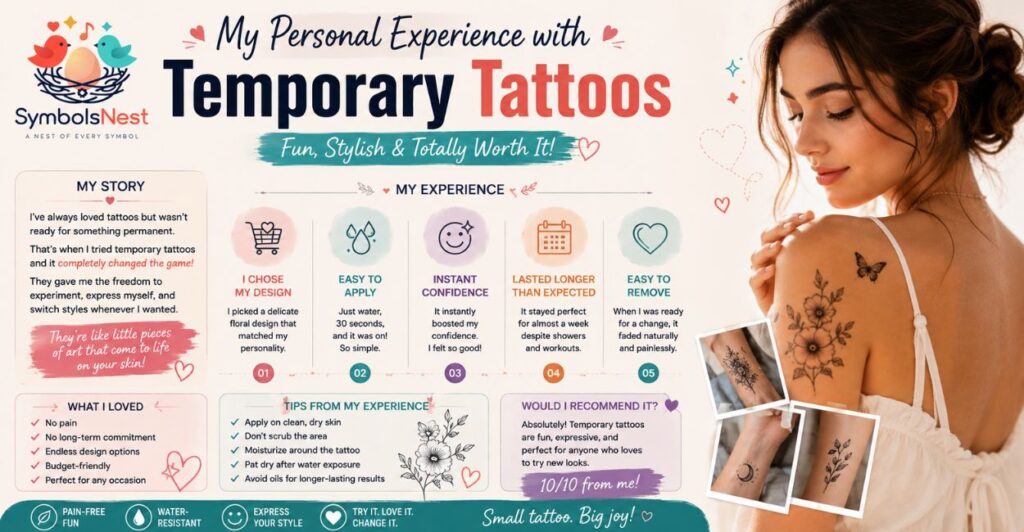
My personal experience with temporary tattoos has been fun and surprisingly convenient. I liked being able to try different designs without making a permanent commitment. Applying the tattoo was simple, and it looked stylish once it settled on my skin. It gradually faded with time, which made changing designs easy. I especially enjoyed experimenting with floral and minimalist styles. Overall, temporary tattoos gave me a creative way to express myself while keeping things temporary, affordable, and easy to change whenever I wanted.
How Long Do Temporary Tattoos Last?
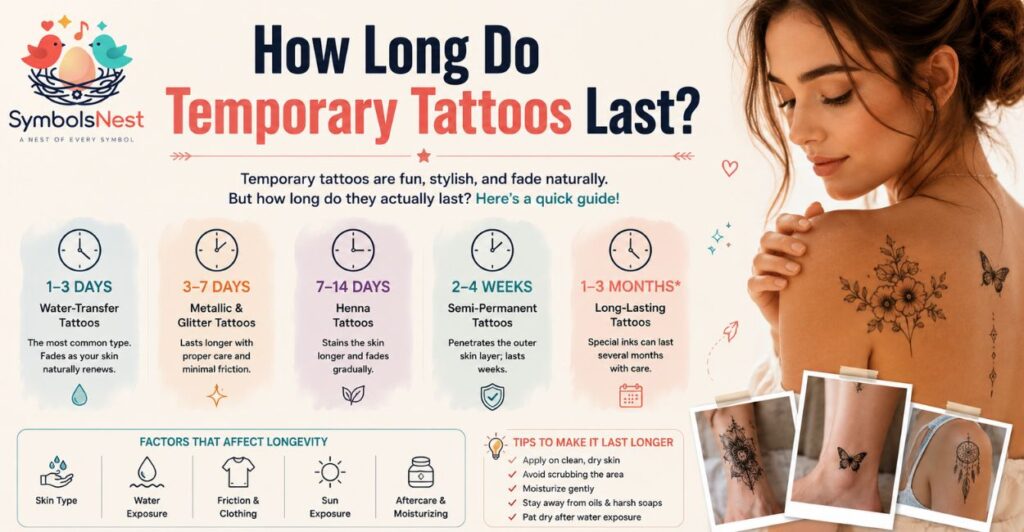
Most standard temporary tattoos last between three days and two weeks. Water transfer decals fade fastest, while a well applied henna design can last up to three weeks.
Semi-permanent tattoo formulas, which use specialised inks and finer application methods, can hold for several weeks to a few months.
Claims of a temporary tattoo lasting a full year or two years usually refer to cosmetic tattooing or permanent makeup rather than a true temporary tattoo, so it is worth checking exactly what product or service is being offered.
A few factors decide how long any design stays visible on your skin:
• Skin type and natural oil production
• Where on the body the tattoo is placed
• Exposure to water, sweat, and swimming
• Friction from clothing or repeated touching
• The quality of the product and how carefully it was applied
It helps to set realistic expectations before you buy. A cheap decal from a party supply pack is never going to hold up the way a professionally made semi-permanent design will, and no product marketed as a true temporary tattoo should be expected to last a full year without fading, cracking, or being washed away by everyday activity.
| Tattoo Type | Typical Duration |
| Water transfer tattoo | 3 to 7 days |
| Henna or mehndi | 1 to 3 weeks |
| Metallic temporary tattoo | 3 to 5 days |
| Semi-permanent tattoo | Several weeks to a few months |
Types of Temporary Tattoos
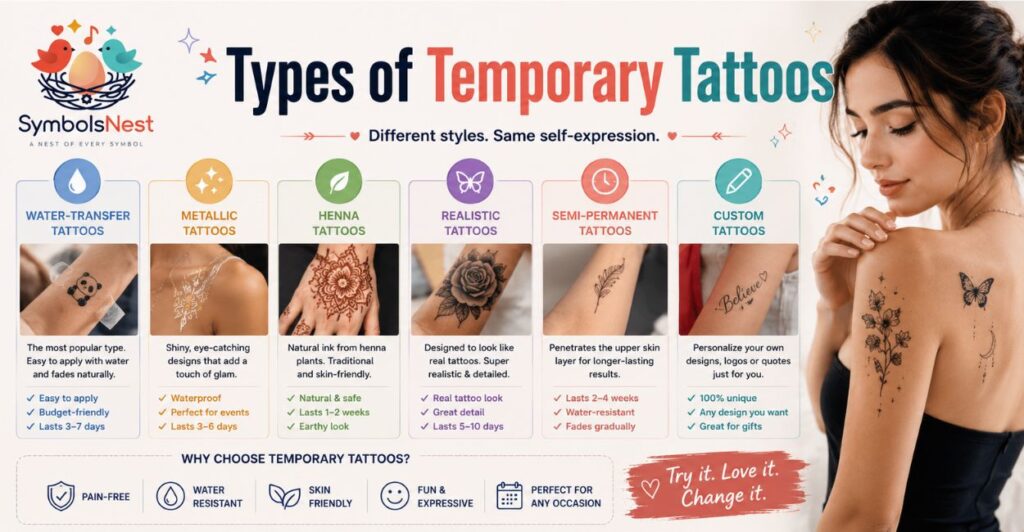
Not all temporary tattoos are made the same way. Here are the most common types you will come across:
• Water-transfer tattoos: printed decals applied with a damp cloth, the most common type sold in stores
• Henna tattoos: plant based paste that stains the skin in reddish brown tones and fades gradually
• Metallic tattoos: gold or silver foil designs often used for festivals and special occasions
• Realistic tattoos: fine-line or shaded designs printed to closely resemble permanent ink
• Semi-permanent tattoos: longer lasting formulas applied with specialised tools rather than a simple decal
• Custom tattoos: personalised designs made to order from your own artwork or photo
Each type suits a different occasion. Water transfer decals are ideal for quick, low cost fun, henna works well for cultural events and longer wear, metallic designs shine at festivals and parties, and custom or realistic options are best when you want a design that photographs closely to permanent ink.
Not Preparing the Skin Properly
Clean and dry skin gives your temporary tattoo a better surface to stick to. Applying a tattoo over oily, sweaty, or dirty skin can make the design transfer unevenly or fade faster.
Before applying your temporary tattoo:
- Wash the area with soap and water
- Dry the skin completely
- Avoid lotions, oils, and greasy products
Proper skin preparation helps the temporary tattoo adhere evenly and gives it a cleaner, more natural-looking finish.
Rushing the Application Process
Temporary tattoos are simple to apply, but rushing can leave you with a patchy or incomplete design. Position the tattoo carefully and follow the application instructions instead of trying to finish quickly.
During application:
- Apply even pressure across the design
- Follow the recommended timing
- Keep the tattoo still
- Avoid moving or fidgeting
Taking a little extra time helps the tattoo transfer properly and gives you sharper, more defined results.
Expecting Instant Results
Some temporary and semi-permanent tattoos do not show their final color immediately. The design may look lighter at first and gradually become darker as it develops on the skin.
Instead of judging the tattoo straight away:
- Give it enough time to develop
- Avoid rubbing or washing it unnecessarily
- Follow the product’s development instructions
Being patient can help you achieve a more realistic and natural-looking temporary tattoo.
Overexposing the Tattoo to Water Too Soon
Water can affect a temporary tattoo while it is still setting. Taking a long shower, swimming, or soaking the tattoo shortly after application may cause the design to fade or lose its sharp appearance.
For better temporary tattoo longevity:
- Avoid prolonged showers immediately after application
- Don’t soak the tattoo in water
- Avoid swimming soon after applying it
Once the tattoo has properly dried and settled, normal daily activities are less likely to affect its appearance.
Trying to Remove It Immediately
A temporary tattoo is designed to fade gradually, so trying to remove it immediately can lead to unnecessary rubbing or irritation. Some semi-permanent tattoos may remain visible for several days or longer depending on the formula and skin.
If you want to speed up temporary tattoo removal:
- Use gentle exfoliation
- Avoid aggressive scrubbing
- Give your skin time to recover
A gentle removal method is better than repeatedly rubbing the same area. Always follow the removal instructions for your particular tattoo.
Selecting the Design Size or Style
Choosing the wrong tattoo size or style can make the design look out of place. A tattoo that looks great in a picture may not have the same effect when placed on a different body area.
When choosing a temporary tattoo:
- Consider the size of the placement area
- Choose a style that matches your look
- Think about your clothing and daily activities
- Make sure the design fits the shape of the area
A well-matched design size and placement can make your temporary tattoo look more balanced and realistic.
Using on Unprepared Hairy Skin
Body hair can interfere with temporary tattoo transfer, especially when the design contains fine lines or small details. Hair may prevent the tattoo from making full contact with the skin.
If the selected area is very hairy:
- Lightly trim the hair if needed
- Clean and dry the skin first
- Choose a flatter area when possible
Preparing the surface properly can help temporary tattoo stickers transfer more evenly and produce sharper-looking details.
Constant Touching or Rubbing
Touching and rubbing your temporary tattoo too much can cause the design to fade faster. Friction from your hands, towels, tight clothing, or everyday movement can gradually affect the tattoo’s appearance.
After application:
- Let the tattoo settle naturally
- Avoid unnecessary touching
- Blot the area instead of rubbing it
- Avoid tight clothing over the tattoo at first
Reducing friction helps protect the tattoo’s color, definition, and overall longevity.
Forgetting That Less Is More
Using too many temporary tattoos at once can make your overall look feel crowded. A few carefully selected designs can often look more natural and noticeable than several unrelated tattoos.
For a cleaner appearance:
- Choose one or two well-placed designs
- Leave enough space between tattoos
- Use designs that complement each other
- Focus on clean and defined details
The right combination of design, size, and placement can create a more balanced temporary tattoo look without overwhelming your style.
Can You Get a Realistic Temporary Tattoo
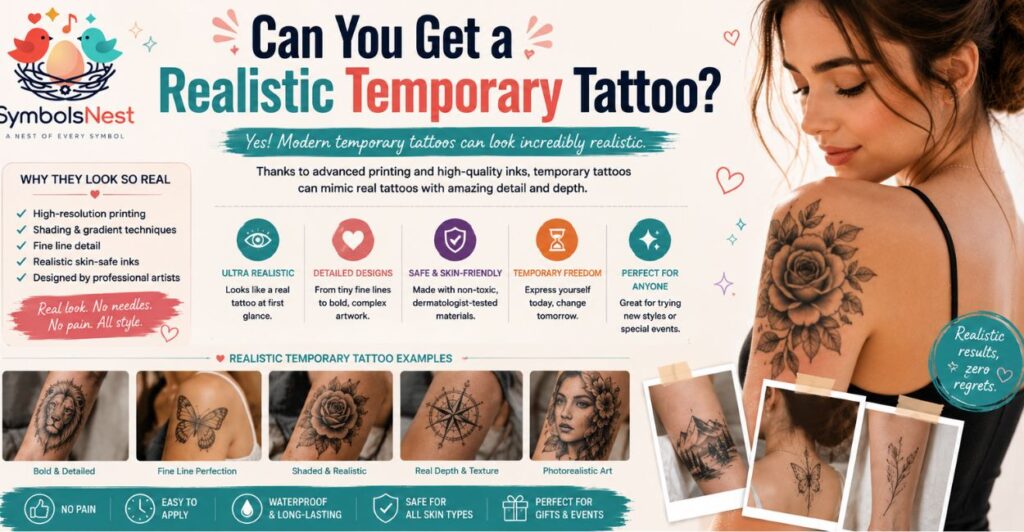
Yes, modern printing has made it possible to create temporary tattoos that closely resemble permanent ink.
Fine line work, black and gray shading, and even photorealistic portraits can now be reproduced as high quality transfers.
These designs work well on the forearm, shoulder, or upper arm, where there is enough flat space to show off detail.
If you want design inspiration before choosing a realistic style, browsing flower symbolism and meanings is a good place to start, since floral designs remain one of the most requested realistic tattoo themes.
Realistic temporary tattoos also tend to cost more than basic decals because they require higher resolution printing and finer transfer paper.
If you are testing a design before getting it done permanently, spending a little more on a realistic version is usually worth it, since it gives a far more accurate preview than a simplified cartoon style decal.
Are Temporary Tattoos Safe for Your Skin?
Most temporary tattoos made from approved cosmetic dyes are safe for short term use. The main risk comes from products marketed as black henna, which sometimes contain para-phenylenediamine, an ingredient that can trigger blistering, itching, and long lasting sensitivity in some people.
To lower the risk of a reaction:
• Do a patch test on a small area of skin before full application
• Avoid dark or fast staining henna sold at beaches or roadside stands
• Choose products with a visible ingredient list
• Stop use immediately if you notice redness, swelling, or itching that spreads
The U.S. Food and Drug Administration has published detailed safety guidance on temporary tattoos and black henna reactions, including how these products are regulated.
It is also worth checking where a product was made and sold. Imported novelty tattoos bought from unregulated stalls are more likely to skip proper ingredient labeling than products from established, well reviewed brands, so buying from a known source is one of the simplest ways to lower your risk.
Are Temporary Tattoos Painful?
No, a properly applied temporary tattoo should not hurt. Because the design sits on top of the skin rather than being injected into it, there is no needle involved and no puncturing of the skin.
Some people notice mild tingling from henna paste as it dries, and removal can cause slight sensitivity if the skin is rubbed too hard, but this is very different from the pain associated with a permanent tattoo.
How to Apply a Temporary Tattoo?
• Clean and dry the area of skin where the tattoo will go
• Position the design face down and check placement before wetting it
• Press a damp cloth firmly over the backing for the recommended time
• Slowly peel away the paper backing without dragging it sideways
• Let the tattoo air dry for a few minutes before touching clothing
Taking an extra minute during application makes a real difference. Rushing the peel step is the most common reason a fresh temporary tattoo turns out patchy or half transferred, so hold the cloth in place for the full recommended time rather than checking too early.
How to Make a Temporary Tattoo Last Longer?
• Apply it to clean, dry, freshly exfoliated skin
• Avoid rubbing or scratching the design
• Pat the area dry instead of scrubbing after showering
• Skip heavy lotions or oils directly on top of the tattoo
• Choose a slightly looser area of clothing to reduce friction
A light layer of translucent setting powder pressed over a fresh design can also help it survive the first few hours better, especially in humid weather or before an event where you know you will be moving around a lot.
How to Remove a Temporary Tattoo?
Most water transfer tattoos come off with soap and warm water, or by gently rubbing baby oil or rubbing alcohol over the design with a cotton pad.
Henna stains fade on their own as skin cells turn over, usually within one to three weeks, and cannot be washed off instantly. Avoid harsh scrubbing, especially on sensitive skin, since aggressive removal can cause irritation even after the ink itself is gone.
If a design needs to disappear quickly for work or another commitment, layering rubbing alcohol on a cotton pad and holding it against the skin for a few seconds before wiping usually speeds things up.
Follow with a fragrance free moisturizer afterward, since alcohol based removal can leave skin feeling dry.
Temporary Tattoos vs. Semi-Permanent Tattoos
| Feature | Temporary Tattoo | Semi-Permanent Tattoo |
| Duration | A few days to three weeks | Several weeks to a few months |
| Application | Surface decal or paste | Specialised ink and tools |
| Needles involved | No | Sometimes, depending on method |
| Removal | Usually easy | Fades gradually, harder to speed up |
| Best for | Events, experimenting, short term wear | Longer term look without full commitment |
If you are choosing between the two, think about how long you actually want the design to last. A weekend trip or single event rarely justifies the extra cost of a semi-permanent formula, while an ongoing project, such as covering a scar or trying out a large placement, benefits more from the longer wear time.
Best Temporary Tattoo Designs by Meaning
Choosing a design with a bit of meaning behind it makes a temporary tattoo feel more personal, even if it only lasts a couple of weeks. Some of the most requested themes include:
• Flowers, often chosen to represent growth, beauty, or a specific season
• Sun and moon pairings, popular for representing balance or a duality theme
• Hearts, in different colors, each carrying its own symbolic meaning
• Stars, commonly used for guidance, ambition, or a minimalist aesthetic
For a closer look at what these symbols represent before you pick one, check out this guide to sun and moon tattoo meanings, or browse
star symbol designs for more inspiration.
There is no wrong choice when it comes to symbolism. Some people pick a design purely because they like how it looks, while others choose something tied to a memory, a milestone, or a personality trait, and both approaches work perfectly well for a temporary tattoo.
Where to Place a Temporary Tattoo?
Placement affects both how visible the design is and how long it tends to last:
• Wrist: easy to show off, but fades faster due to frequent washing
• Forearm: good flat space for detailed or realistic designs
• Shoulder: less friction from clothing, so the design lasts longer
• Ankle: subtle placement that is easy to cover if needed
• Collarbone: popular for smaller, delicate designs
• Upper arm: enough space for larger or sleeve style designs
If you are unsure where to start, choose a spot that gets minimal friction from clothing and is not exposed to water too often, such as the upper arm or shoulder. This alone can add several extra days to how long a design stays looking sharp.
Temporary Tattoos on TikTok and Instagram: A Gen Z Favorite
Temporary tattoos have become a regular feature in Gen Z social content, from get ready with me videos to festival outfit posts. Their appeal is simple: they photograph well, they can be swapped out for every event, and they let people test a design before committing to it permanently. Matching temporary tattoos with friends, coordinated designs for concerts, and aesthetic close up shots of wrist and collarbone placements are some of the most common trends right now.
If your temporary tattoo photos are going straight to Instagram, pairing them with an aesthetic Instagram bio is an easy way to keep your whole profile feeling coordinated.
Small, symbolic designs tend to perform best on social platforms because they are easy to photograph up close and pair naturally with jewelry, nail art, or an outfit theme. Since temporary tattoos wash off within days, they also give creators a low pressure way to change their aesthetic for every new post without any long term risk.
Temporary Tattoo Aftercare for Sensitive Skin
People with sensitive or reactive skin should take a few extra precautions. Choose fragrance free, dye light products, and always patch test on the inner arm at least 24 hours before applying a design somewhere more visible.
If irritation does appear, resist the urge to scratch, since broken skin heals slower and is more likely to scar.
Keeping the area moisturized once the tattoo has fully faded also helps skin recover faster, especially after using alcohol based removal methods. If a reaction includes swelling, blistering, or spreading redness rather than mild itching, it is best to stop use of that product
entirely and consult a healthcare professional.
The American Academy of Dermatology outlines what a mild reaction looks like versus one that needs medical attention, which is a useful reference if a design does not settle down within a day or two.
Frequently Asked Questions About Temporary Tattoos
What is a temporary tattoo?
A design applied to the surface of the skin using a decal, paste, or specialised ink that fades naturally over days or weeks.
How long do temporary tattoos last?
Most last three days to three weeks, depending on the type, placement, and how well the skin is cared for afterward.
Are temporary tattoos safe?
Most approved products are safe, though black henna mixes can cause allergic reactions in some people.
Do temporary tattoos hurt?
No, they are applied without needles, so there is no puncturing pain involved at any stage.
Can a temporary tattoo last for months?
Semi-permanent formulas can last several weeks to a few months, longer than a standard decal or henna design.
Can you get a realistic looking temporary tattoo?
Yes, fine line and shaded prints can closely resemble permanent ink, especially on flatter areas like the forearm.
What is another name for a temporary tattoo?
They are also called skin decals, transfer tattoos, body art stickers, or mehndi for henna based versions.
Final Thoughts
Temporary tattoos remain one of the simplest ways to try a new look without any long term commitment. Whether you go with a quick water transfer design for a weekend event or a longer lasting henna pattern, choosing a reputable product and following basic aftercare will keep the experience safe and enjoyable from application through to fading.

hi iam Emma SymbolsNest.com is a simple website where you can find thousands of symbols and special characters. It helps you copy and paste Unicode symbols for social media, messages, documents, and creative projects.
